




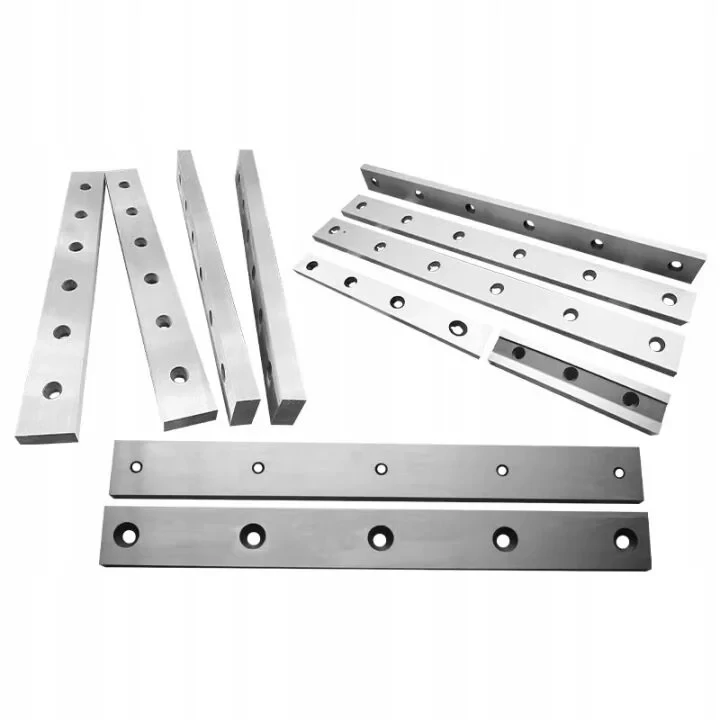


6x2500 mm upper guillotine blades for NG4 hydraulic 4-way shears – replacement


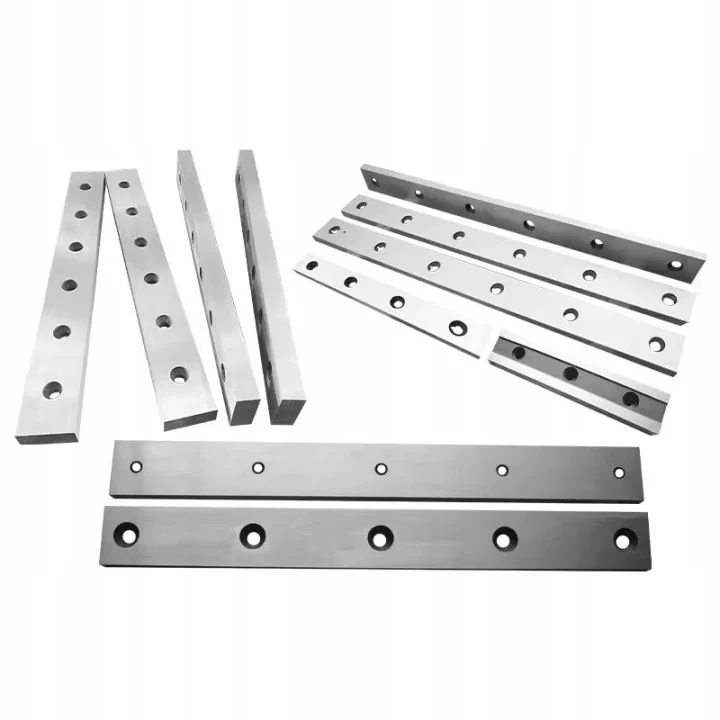
Upper blade for 6x2500 hydraulic guillotine – 9CrSi tool steel
Hardness HRC 55–60
We present a professional, high-performance upper (movable) blade designed for use in heavy-duty hydraulic and mechanical guillotines.
This model has been designed for machines with operating parameters 6x2500, which means it is capable of precisely cutting metal sheets up to 6 millimetres thick with a working width of 2500 millimetres.
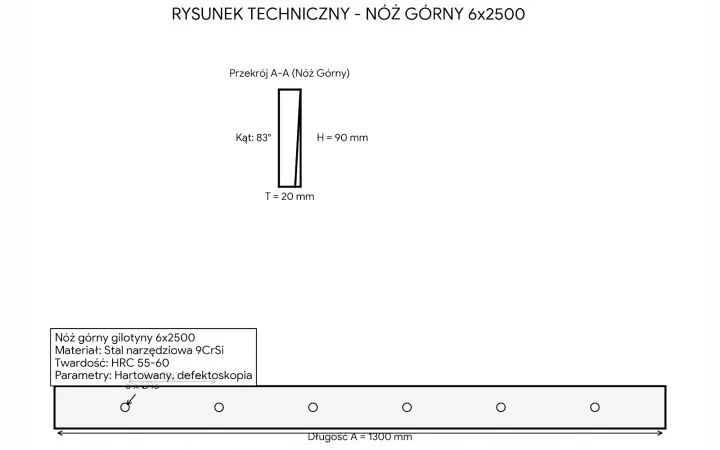
Description of the technical specifications of the 6x2500 top knife
Below you will find a detailed analysis of the parameters shown in the diagram, which are crucial for the correct identification and installation of the component:
- Geometry and Design Dimensions:
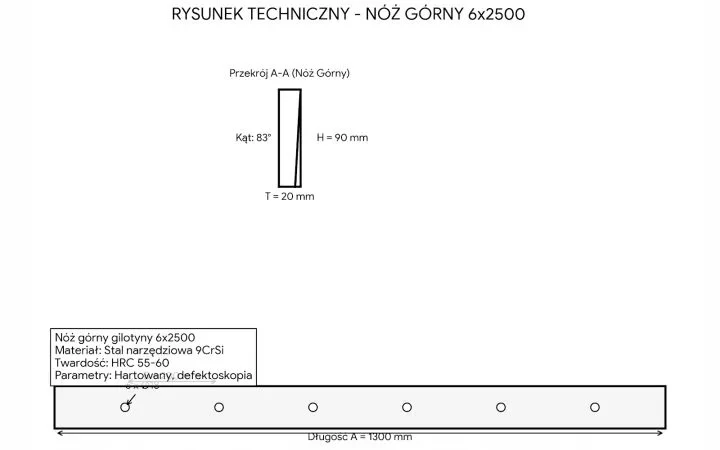
Segment length (A): This is 1300 mm. The machine’s full working width (2500 mm) is covered by two such segments fitted side by side.
Height (H): The blade is 90 mm high.
Thickness (T): In accordance with the specification for models designed to cut 6 mm sheet metal, the thickness is 20 mm.
Blade angle: Precisely ground cutting edge at an angle of 83°. This geometry ensures optimum cutting performance for steel sheets.
- Mounting system:
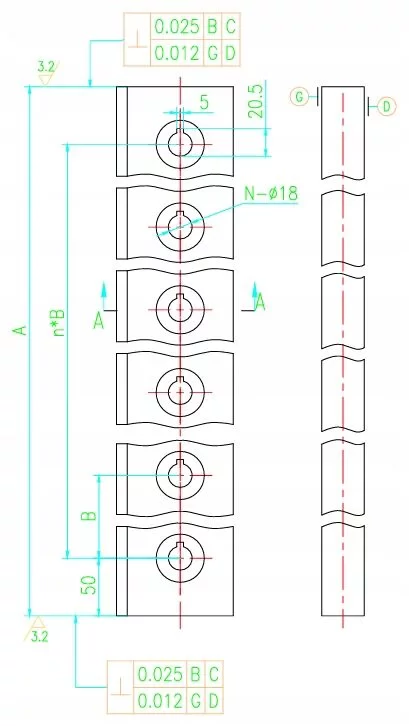
Number of holes (n): The segment has 6 mounting holes.
Hole spacing (B): The axial distance between the holes is 200 mm.
Hole diameter: Through holes with a diameter of 18 mm.
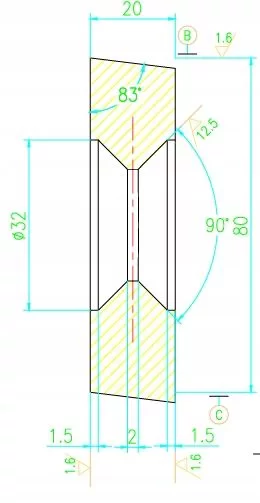
Screw sockets: They feature 32 mm diameter countersinks, allowing the screw heads to be completely concealed beneath the blade surface.
- Material and Quality Properties:
Material: 9CrSi high-alloy tool steel.
Hardness: Hardened to HRC 55–60.
Inspection: Each component undergoes non-destructive testing to rule out internal defects in the steel.
Edge: The specifications strictly prohibit blunting the cutting edge – it must remain perfectly sharp.
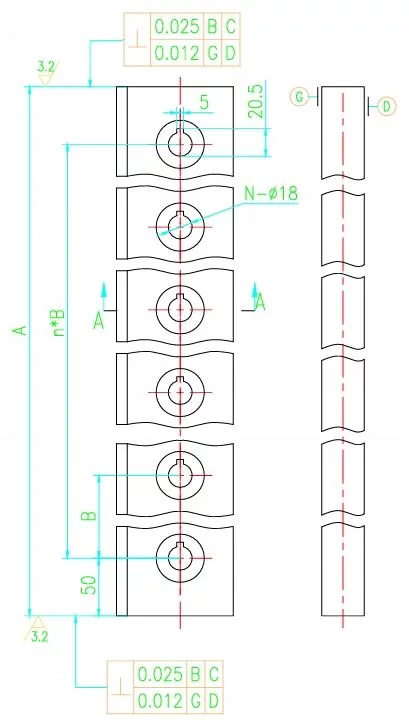
Detailed technical and design specifications
The upper blade is a component with increased mass and rigidity, which is essential when processing 6-millimetre-thick sheet metal. The use of a segmented system allows for precise adjustment of the cutting line and facilitates machine maintenance.
- Length of a single segment: Each blade is 1,300 millimetres long. The standard set for a 2.5-metre-wide guillotine consists of two such segments mounted side by side, giving a total cutting length of 2,600 millimetres.
- Blade thickness and height: As shown in the technical drawing, the blade is 20 millimetres thick, which ensures exceptional resistance to bending forces when working with thick material. The height of the element is 90 millimetres.
- Mounting system: The segment is fitted with 6 mounting holes, each 18 millimetres in diameter. The axial spacing between the holes is 200 millimetres.
- Blade geometry: The cutting edge is ground to a precise angle of 83 degrees. This profile allows the blade to penetrate the material progressively, which significantly reduces the load on the machine’s hydraulic system.
Materials technology – 9CrSi steel
The key to this tool’s reliability lies in the use of a silicon-chromium alloy tool steel designated 9CrSi. This material is highly regarded in the metalworking industry for its unique properties:
- Abrasion resistance: This steel is designed to operate in harsh conditions where the cutting edge is constantly exposed to friction. As a result, the blade retains its sharpness for much longer than standard replacements made from low-alloy steels.
- Working hardness: The blades undergo a precise heat treatment process, resulting in a hardness ranging from 55 to 60 HRC on the Rockwell scale. This hardness ensures that the cutting edge is resistant to plastic deformation even when cutting sheet metal of the maximum permissible thickness.
- High hardenability: The steel’s structure ensures uniform hardness across the entire cross-section of the blade, allowing the tool to be resharpened (regenerated) multiple times without losing its cutting properties.
Why does edge quality matter?
In accordance with the manufacturer’s technical specifications, the cutting edge of the lower blade is ground to a sharp point and has no rounding. During the cutting process, the lower blade acts as a fixed support – if its edge were blunt, the sheet metal, instead of being cut, would start to be ‘pulled’ into the gap between the blades. This leads to the formation of a so-called burr (a sharp, jagged edge on the sheet metal) and places an excessive load on the machine’s hydraulic system. Our blades guarantee a clean, smooth cut, which eliminates the need for additional finishing work on the sheet.
- Please note that not only can you purchase top-class cutting components from our company, but we also offer a professional blade replacement service.