




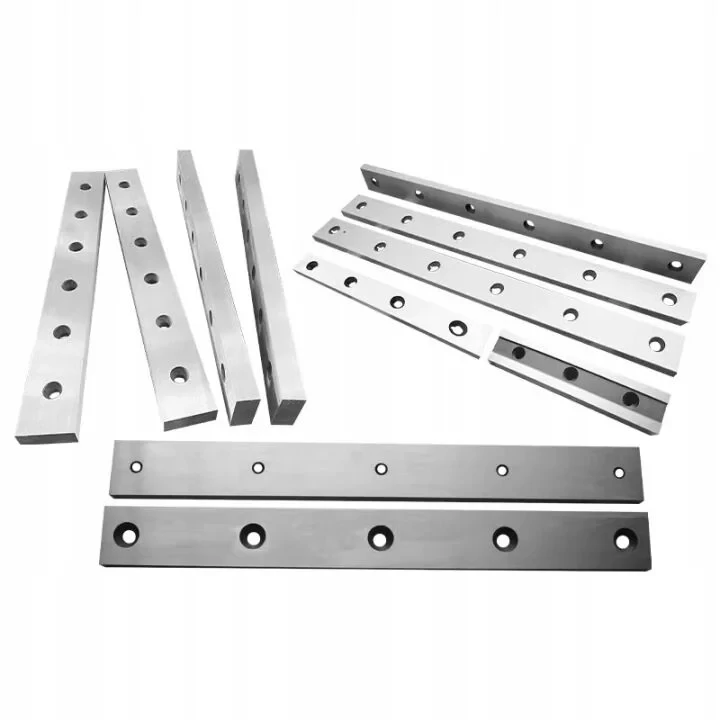


4x3200 mm lower guillotine blades for NG4 hydraulic 4-way shears – replacement


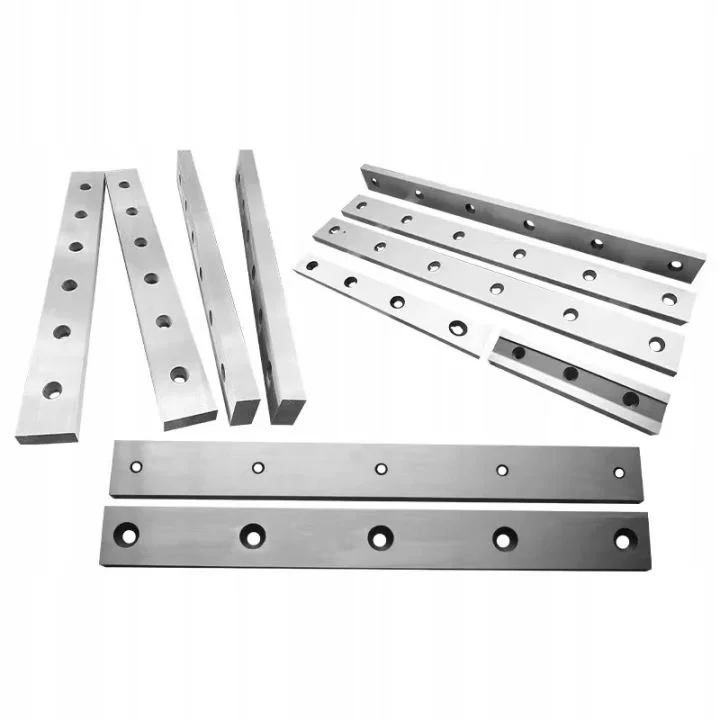
Lower blade for 4x3200 hydraulic guillotine – 9CrSi tool steel
Hardness HRC 55–60
We present a highly specialised lower blade (fixed), designed for the most demanding cutting processes in hydraulic and mechanical guillotines.
This model is designed for machines with operating parameters 4x3200, which means it is capable of cutting sheet metal up to 4 millimetres thick with a working width of 3200 millimetres.
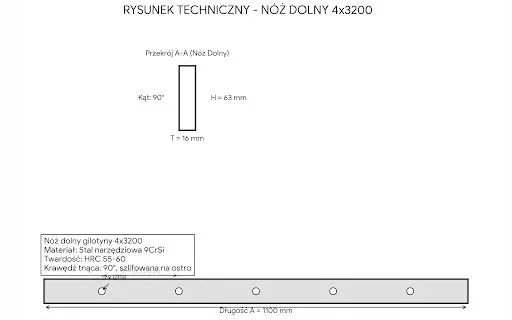
A detailed explanation of the design and dimensions
The knife has been designed using a segmented system, which is standard on machines with a large working width. This design facilitates transport, assembly and the precise levelling of the tool on the machine table.
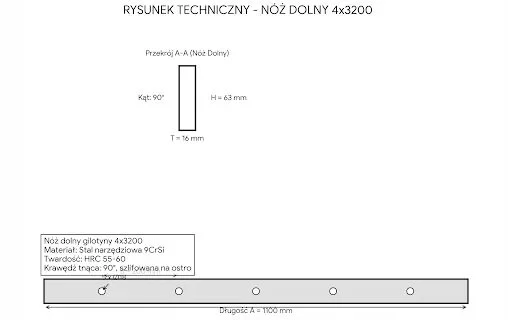
- Length of a single segment: Each segment is 1100 millimetres long. For a guillotine with a width of 3200 millimetres, a full set consists of three such segments mounted side by side, resulting in a total cutting line of 3300 millimetres, ensuring a safe working margin.
- Cross-sectional dimensions: The blade is 16 millimetres thick and 63 millimetres high. These dimensions guarantee high inherent rigidity of the component, which directly translates to the absence of deformation when in contact with hard material.
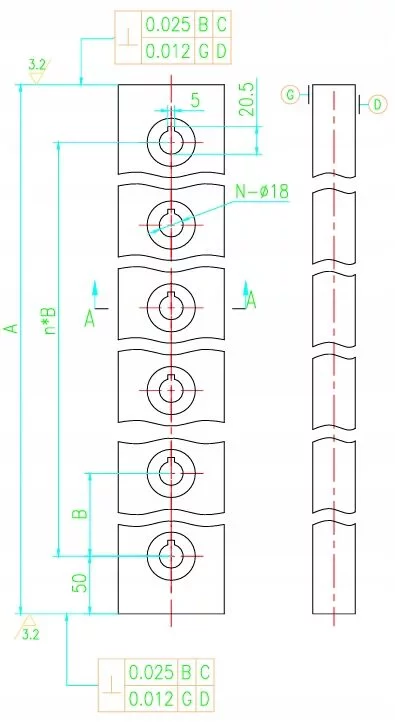
- Mounting system: The component has 5 mounting holes with a diameter of 18 millimetres. The axial spacing between the holes is 200 millimetres, which allows the blade to be screwed securely and stably to the guillotine table beam.
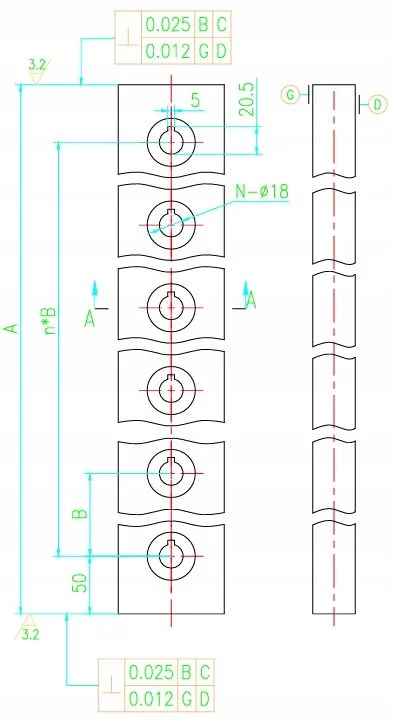
Technical specifications of the component
- Purpose of the component: A highly specialised bottom knife, permanently mounted in the machine table, providing a stable cutting base for the workpiece.
- Compatibility with equipment: A blade designed for hydraulic and mechanical guillotines with operating parameters of 4x3200, which corresponds to cutting sheets up to 4 millimetres thick and 3200 millimetres wide.
- Construction material used: Top-quality 9CrSi alloy tool steel, characterised by excellent hardenability and resistance to fracture under impact loads.
- Working hardness of the blade: The component has undergone precision heat treatment, achieving a hardness of between 55 and 60 HRC on the Rockwell scale, which guarantees long-lasting edge sharpness.
- Length of a single segment (A): Exactly 1,100 millimetres, allowing three segments to be combined to form a full cutting line for guillotines with a width of 3.2 metres.
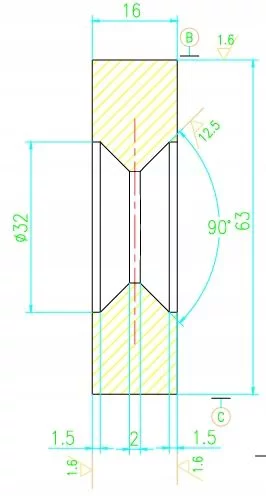
- Blade profile height: 63 millimetres, ensuring high structural rigidity and resistance to deformation when operating under high pressure.
- Blade thickness (T): 16 millimetres, which is the optimum value for stable seating in the guillotine table slot.
- Cutting edge geometry: A right angle of 90 degrees, designed to provide an ideal support edge for the upper blade, thereby eliminating the risk of the sheet metal being drawn into the gap.
- Mounting hole system (n): Each segment is fitted with 5 through-holes, ensuring secure and safe attachment of the component to the machine body.
- Diameter of mounting holes: 18 millimetres, suitable for standard fixing bolts used in industrial shears.
- Axial spacing of holes (B): Exactly 200 millimetres between the centres of adjacent holes, ensuring full repeatability of assembly and ease of blade replacement.
- Mounting screw sockets: The holes feature special 32-millimetre-diameter countersinks, allowing the screw heads to be completely concealed beneath the blade surface to ensure smooth material feed.
- Quality requirements: Each batch of material undergoes a defect detection process to rule out the presence of invisible internal defects, and the cutting edge is ground to a sharp point with no permissible rounding.
Materials technology – 9CrSi steel
The key to this tool’s reliability lies in the use of a silicon-chromium alloy tool steel designated 9CrSi. This material is highly regarded in the metalworking industry for its unique properties:
- Abrasion resistance: This steel has been designed for use in demanding conditions where the cutting edge is constantly exposed to friction. As a result, the blade retains its sharpness for much longer than standard replacements made from low-alloy steels.
- Working hardness: The blades undergo a precise heat treatment process, resulting in a hardness ranging from 55 to 60 HRC on the Rockwell scale. This hardness ensures that the cutting edge is resistant to plastic deformation even when cutting sheet metal of the maximum permissible thickness.
- High hardenability: The steel’s structure ensures uniform hardness across the entire cross-section of the blade, allowing the tool to be resharpened (regenerated) multiple times without losing its cutting properties.
Why does edge quality matter?
In accordance with the manufacturer’s technical specifications, the cutting edge of the lower blade is ground to a sharp point and has no rounding. During the cutting process, the lower blade acts as a fixed support – if its edge were blunt, the sheet metal, instead of being cut, would start to be ‘drawn’ into the gap between the blades. This leads to the formation of a so-called burr (a sharp, jagged edge on the sheet metal) and places excessive strain on the machine’s hydraulic system. Our blades guarantee a clean, smooth cut, which eliminates the need for additional finishing work on the sheet.